
Neuroarchitecture: The Art of Building Well-Being


What is neuroarchitecture and where does it come from?
Neuroarchitecture is a discipline that merges advances in neuroscience with architecture to design spaces that enhance well-being, mental health, and cognitive development. It stems from a fundamental question: how does the physical environment influence our emotions, thoughts, and behaviors?
Although the relationship between humans and built environments has been explored since ancient times, neuroarchitecture as a formal field emerged in the late 20th century, driven by discoveries related to brain plasticity and adult neurogenesis—the brain’s ability to regenerate and adapt in stimulating environments.
One of the field’s foundational milestones was the design of the Salk Institute in California (1965), created by architect Louis Kahn in collaboration with scientist Jonas Salk. This project aimed to foster scientific creativity through architecture, laying the groundwork for a new vision: designing not just for function or aesthetics, but for the holistic balance of those who inhabit the space.

Neuroscience and architecture: a deep connection
The connection between neuroscience and architecture grows stronger through studies showing how environmental stimuli—light, color, textures, acoustics, spatial layout—trigger measurable neurological responses. Thanks to neuroimaging technologies, it’s been proven that certain spatial configurations can reduce stress, improve focus, and boost creativity.

This collaboration between science and design empowers architects to make informed decisions that go beyond solving practical needs—they positively impact users' quality of life. At Coronel Associates, we integrate these principles into our residential and commercial projects, prioritizing emotional comfort without neglecting efficiency.
How do spaces influence our behavior and mental health?
We spend over 90% of our lives indoors. Therefore, the way these spaces are designed profoundly affects our psychological well-being. Some key factors addressed by neuroarchitecture include:
Natural light: Stimulates serotonin and vitamin D production, both essential for emotional balance. Its absence is linked to conditions such as seasonal depression.
Ambient noise: Excessive noise can increase stress levels and interfere with concentration and rest.
Nature presence (biophilia): Viewing or interacting with natural elements lowers cortisol levels and promotes relaxation.
Colors and materials: Soft tones and pleasant textures have calming effects, while intense colors can either energize or agitate, depending on how they're used.
Flexible and ergonomic design: Encourages social interaction, autonomy, and active learning.
Scientific evidence is clear: studies show that hospitalized patients with views of green spaces recover faster and require less medication. Design has a real, tangible, and measurable impact on our health.
Real-world applications: residential and commercial spaces
Commercial spaces
Designing commercial spaces from a neuroarchitectural perspective goes beyond attracting clients—it seeks to create pleasant environments that positively influence the mood of both visitors and workers. Lighting, circulation, material selection, and noise control are key elements in crafting memorable experiences.
In the post-pandemic era, commercial neuroarchitecture has evolved toward more flexible, sensory-rich, and emotionally intelligent spaces. The focus is not only on functionality but also on customizing environments, integrating natural elements (biophilia), stimulating the senses, and leveraging spatial perception as a tool for connection between brand, product, and user.
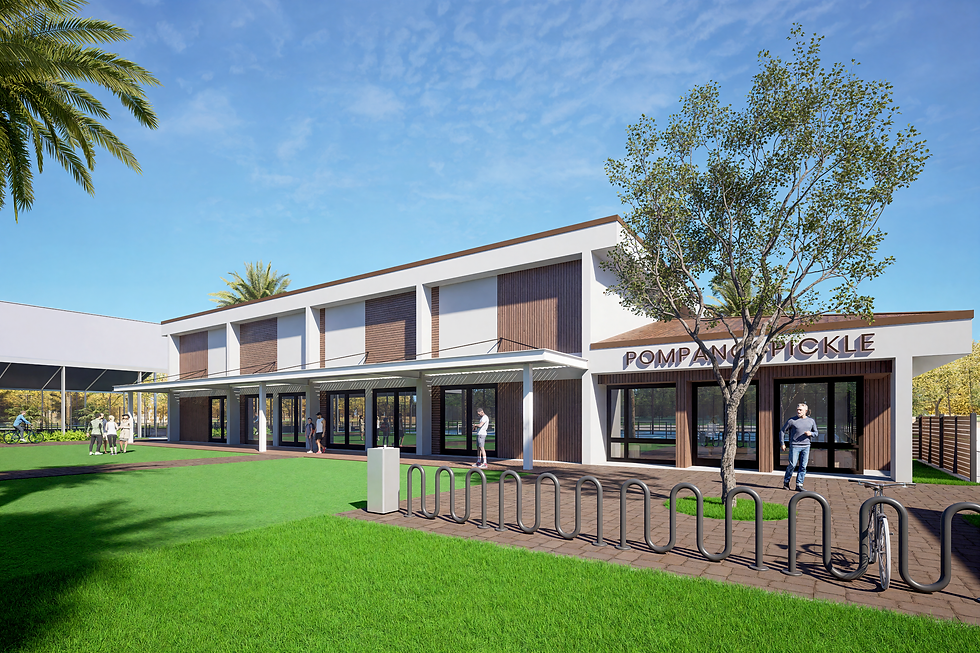
A clear example is our project “POMPANO PICKLE BUILDING”, a commercial space where we applied principles of spatial comfort and visual stimulation to optimize the customer experience. The use of neutral colors, intuitive circulation, wide entrances, and well-planned transition zones fosters an emotional connection between users and the space. Additionally, zoning responds not only to operational needs but also to the sensations each area aims to evoke, balancing visual clarity with sensory interest.
Residential spaces
In the residential realm, neuroarchitecture translates into abundant natural light, cross ventilation, noble materials, and layouts that encourage calm, interaction, and rest. It also includes wellness nooks for individuals and common areas that strengthen family bonds.

In several of our residential designs—both in Ecuador and the United States—we emphasize the indoor-outdoor connection through courtyards, open façades, and the arrangement of functional blocks around spaces that inspire tranquility, resulting in a measurable improvement in users' quality of life.

Looking ahead: responsive architecture and technology
Neuroarchitecture represents a deep transformation in how we approach design. Its future is closely linked to technologies like artificial intelligence and big data, which will allow environments to adapt in real-time to users’ emotional and physiological needs. Imagine spaces capable of adjusting lighting, acoustics, or temperature based on someone’s mood—these experiences are already beginning to materialize.

Moreover, neuroarchitecture aligns with a more empathetic vision of accessible, human-centered design. It is becoming increasingly relevant in public spaces, educational environments, and social housing—where well-being must not be a luxury, but a basic condition.
At Coronel Associates, we believe in architecture that connects with people. Applying the principles of neuroarchitecture means designing with empathy, science, and purpose—because well-designed spaces are not only inhabited: they are felt, lived, and remembered.